Vending Machines Used for Distributing Industrial Supplies: Improving Efficiency and Inventory Management
In this article, we explore the innovative use of industrial vending machines for distributing industrial supplies. The reader will learn how these solutions can improve inventory management, enhance security, and boost efficiency in industrial settings. Specifically, we focus on vending solutions using weight-sensing technology.
The Concept Behind Industrial Supply Vending Machines
Vending machines, traditionally associated with snacks and beverages, have evolved to become a vital component of industrial supply distribution. Industrial vending machines are automated dispensing systems tailored for the workplace, providing controlled access to tools, personal protective equipment (PPE), and other essential industrial supplies. They streamline inventory management, enhance operational efficiency, and improve supply tracking by ensuring that workers have immediate, monitored access to necessary items, thus reducing waste and unauthorized use. This transformation addresses a crucial need in various sectors for efficient, secure, and manageable access to essential supplies. By adopting this innovative approach, industries are changing how they handle inventory, control costs, and ensure workers have immediate access to the tools and materials they need.
Unlike their conventional counterparts, industrial supply vending machines cater to a unique market by dispensing necessary tools, personal protective equipment (PPE), and other critical supplies within workplaces. These machines are not just about convenience; they are about enhancing productivity, tracking inventory usage, and reducing downtime in operations.
Benefits of Using Vending Machines for Industrial Supplies
Cost Savings and Efficiency: Implementing vending machines can significantly reduce wastage and unauthorized use of supplies, translating into direct cost savings for businesses.
Inventory Management and Control: These systems provide real-time tracking of inventory levels, alerting managers to low stock and facilitating automated reordering, thus ensuring that supplies never run out.
Enhanced Security and Tracking of Supplies: With controlled access, businesses can monitor who takes what and when, reducing theft and misuse of supplies.
Reduction in Waste and Increased Sustainability: By dispensing exact quantities and reducing unnecessary access to supplies, companies can minimize waste and support sustainability initiatives.
These benefits become especially important in the VMI environment for both sides of the B2B setting – the distributors and end users of industrial supplies.
Implementation and Integration: the Way to Increase Benefits
Deploying these machines involves considering the industrial environment’s specific needs and integrating the system with existing inventory management software. This integration allows for seamless operation, with the vending system automatically updating inventory levels and providing detailed usage reports.
Several industries, including manufacturing, healthcare, and construction, have successfully implemented industrial vending machines to manage supplies. These case studies highlight significant improvements in inventory accuracy, employee productivity, and overall cost savings.
Challenges and Solutions
While the benefits are clear, some businesses face challenges in adopting vending machine solutions, such as initial setup costs and adapting to new inventory management processes. However, awareness of these challenges helps to find solutions like scalable systems and training resources that can help to overcome these hurdles, ensuring a smooth transition.
How Industrial Vending Machines Work
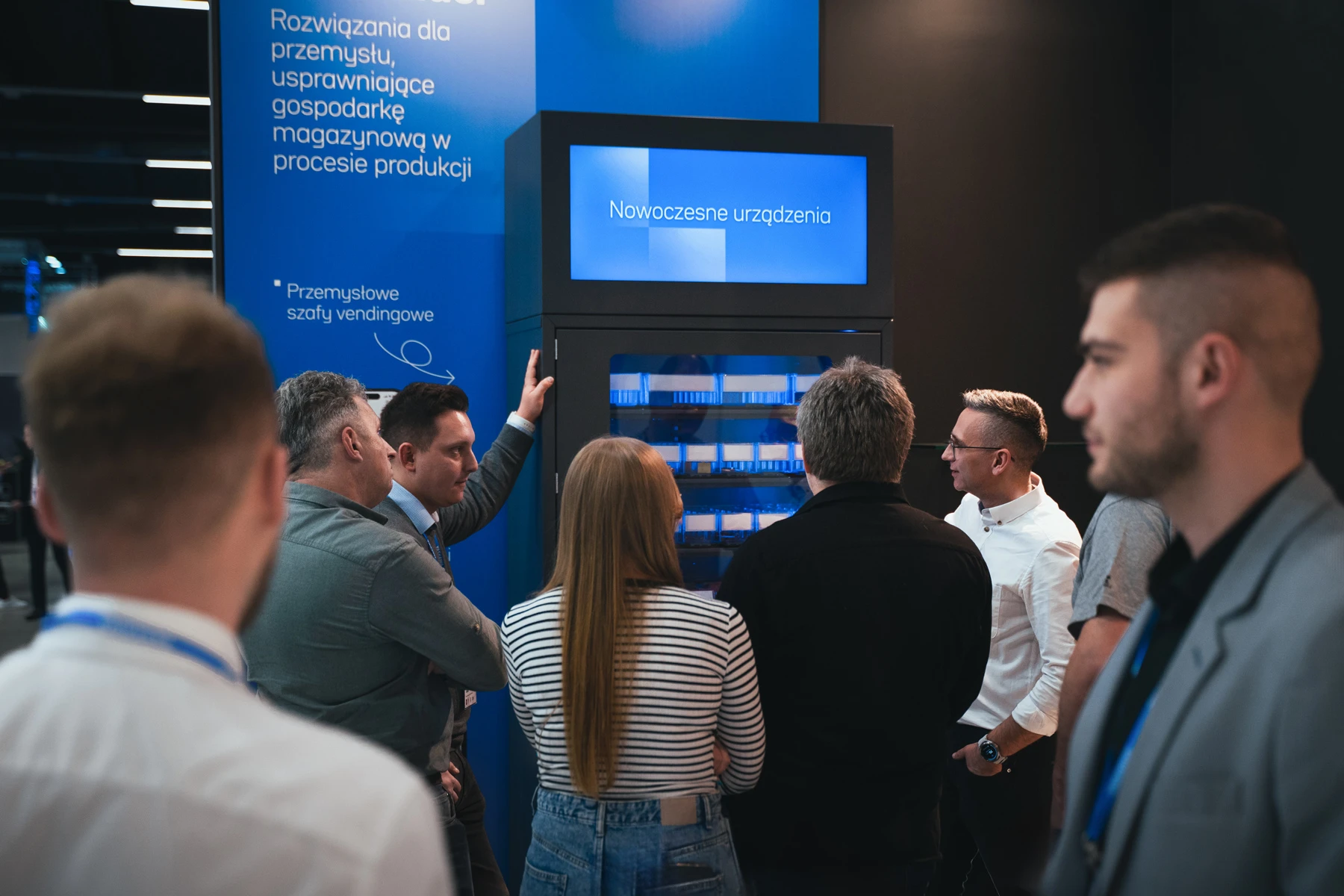
These machines incorporate advanced technology to manage and dispense supplies securely. Users typically access items through a keypad or touchscreen interface, using identification methods such as RFID or NFC badges or PIN codes. This system ensures that only authorized personnel can obtain supplies, which are then automatically logged for inventory and tracking purposes. Releasing the goods to authorized users depends on the types of technology solutions applied in the vending machines and the character of the goods, varying from bulk items like gloves, tape, or fasteners to larger equipment such as power tools.
Types of Industrial Vending Solutions
Industrial vending machines are diverse, catering to different needs within a workplace by offering various types of equipment and supplies. This diversity ensures that businesses can find a vending solution that perfectly fits their specific needs. Each type of machine offers unique benefits, catering to specific requirements for managing and distributing industrial supplies efficiently. The choice of vending equipment depends on the types of items to be dispensed, the desired level of security, and the specific needs of the workplace. Here’s an overview of the primary types:
- Coil Vending Machines: Similar to traditional snack vending machines, coil vending machines dispense smaller items such as gloves, safety glasses, or small tools. These machines are versatile and can handle a wide range of products.
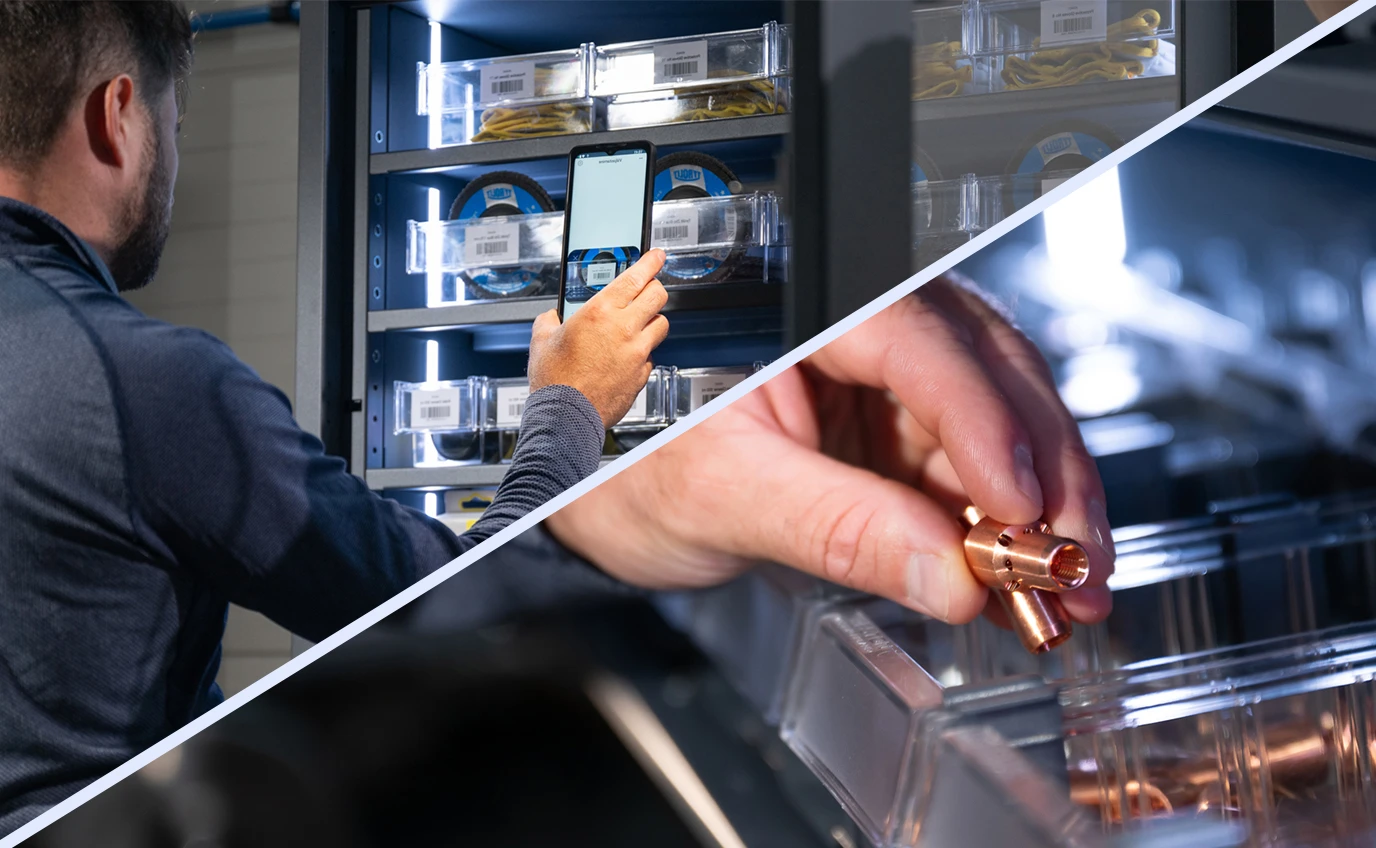
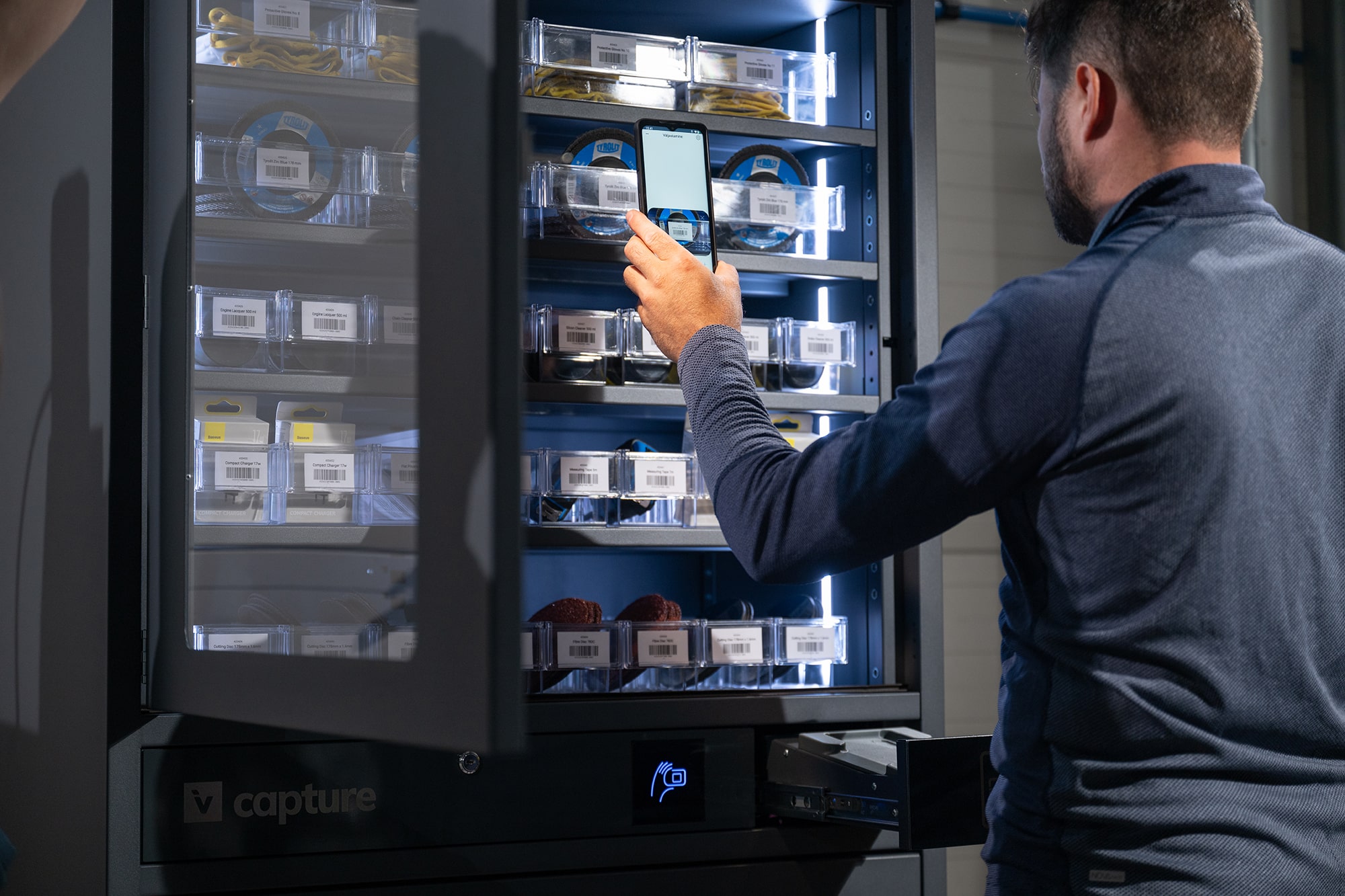
- Locker Vending Machines: For larger items that cannot be dispensed through coils, such as power tools, safety equipment, or large packages of supplies, locker vending machines offer a secure and efficient solution. Users can access items through a digital or physical key system, ensuring that only authorized personnel can check out items. Registration of consumption quantities can be performed by capturing data via scanning barcodes, NFC tags, or text labels (link to Invendor Capture Cabinet)
- Carousel Vending Machines: Carousel vending machines provide an efficient way to store and dispense a variety of items from a single machine. These machines are especially useful for items that come in different sizes and shapes, like gloves, offering flexible storage options and easy access.
- RFID Vending Machines: Utilizing Radio-Frequency Identification (RFID) technology, these machines track inventory and manage supplies by scanning RFID tags attached to items. This technology allows for detailed tracking and management of items, enhancing security and inventory accuracy.
- Weight-Based Vending Machines: These machines dispense items based on weight, making them ideal for bulk items like fasteners, welding rods, or fittings. Users can take the quantity they need while the machine tracks inventory by weight, offering precise control over inventory levels.
Advantages of Weight-Sensing Vending Machines
Weight-based vending solutions offer a unique set of advantages for managing and dispensing industrial supplies, particularly when compared to other types of vending equipment. Here are the main benefits:
- Precision in Dispensing Bulk Items: Weight-based machines allow for the precise dispensing of bulk items such as screws, nuts, bolts, and washers. Users can take exactly the amount they need, reducing waste and ensuring efficient use of inventory.
- Enhanced Inventory Management: These machines provide real-time inventory tracking by weight, enabling more accurate monitoring and control over stock levels. This precise inventory management helps in reducing stockouts and overstocking, optimizing inventory levels.
- Cost Control: By dispensing items based on their weight, companies can better track the usage and cost of supplies, helping to control expenses. This level of detail allows for more accurate budgeting and cost allocation to specific projects or departments.
- Reduced Theft and Shrinkage: Weight-based industrial vending solutions ensure that each item dispensed is accounted for, reducing opportunities for theft and shrinkage. This is particularly valuable for high-value items or consumables that are prone to being lost or taken without authorization.
- Flexible and Scalable: These machines can be adjusted to dispense a wide range of items, making them highly versatile and adaptable to changing business needs. They can cater to a variety of materials and supplies without the need for significant reconfiguration.
- User-friendly and fast operation: In comparison with other types of vending machines, especially those of coil and carousel, weight-sensing solutions enable easy and fast ways to take and return the items and replenish the stock.
To summarize: in comparison to other types of vending machines, weight-based systems offer distinct advantages for managing bulk supplies and consumables, combining precision, security, and ease of use to optimize industrial supply chains.
Challenges of Weight-Based Vending Solutions
While weight-based vending machines offer numerous benefits for industrial supply management, they also come with certain weaknesses and drawbacks when compared to other technologies. Understanding these limitations is crucial for businesses considering their vending machine options. Here are the main drawbacks and means to overcome them:
- Sensitivity to Weight Variations: Small discrepancies in item weight, perhaps due to manufacturing variances, can affect the accuracy of the dispensing and inventory tracking system. This sensitivity requires high precision in the machine’s weight measurement capabilities, which can be challenging to maintain over time. The other way around this limitation is by implementing limits of statistical deviation in weight calculations.
- Calibration and Maintenance: To ensure accuracy, weight-based vending machines require regular calibration and maintenance. This can increase operational costs and require additional oversight compared to simpler vending solutions. A way to minimize this challenge is to ensure that calibration procedures are easy to execute by end users and need no special expertise.
- Complexity and Cost: The technology behind weight-based vending machines is often more complex than that of traditional coil or locker vending machines. This complexity can translate into higher initial costs for purchase and installation, as well as potentially higher ongoing maintenance expenses. A good example of overcoming the high-cost issue is our Invendor weight-sensing cabinet Gravity (link to the appropriate page of Invendor website).
- Environmental Sensitivity: Weight-based systems can be sensitive to environmental factors such as temperature, vibration, dust, and humidity, which might affect the accuracy of weight measurements. Facilities with significant environmental fluctuations may find these machines less reliable, thus proper adjustments must be implemented.
- Risk of Mixing Items: In scenarios where users can access a bulk bin of items, different items could get mixed, leading to inaccuracies in inventory tracking and dispensing. The appropriate error reporting system is needed to help detect major mistakes of misplaced items.
- User Learning Curve: While generally user-friendly, some employees may require training to effectively use weight-based industrial vending solutions, particularly in understanding how to dispense and return items correctly to ensure inventory accuracy. Special attention should be paid to guided filling
Despite these drawbacks, weight-based vending machines remain a valuable tool for many industries, particularly those dealing with bulk consumables and components. The key is to carefully weigh these limitations against the specific needs and circumstances of your operations to determine if they’re the right fit for your supply management strategy. A good example of bypassing and overcoming challenging limitations is accomplished in the Invendor Gravity Cabinet design.
While weight-based vending machines offer numerous benefits for industrial supply management, they also come with certain weaknesses and drawbacks when compared to other technologies. Understanding these limitations is crucial for businesses considering their vending machine options. Here are the main drawbacks and means to overcome them:
- Sensitivity to Weight Variations: Small discrepancies in item weight, perhaps due to manufacturing variances, can affect the accuracy of the dispensing and inventory tracking system. This sensitivity requires high precision in the machine’s weight measurement capabilities, which can be challenging to maintain over time. The other way around this limitation is by implementing limits of statistical deviation in weight calculations.
- Calibration and Maintenance: To ensure accuracy, weight-based vending machines require regular calibration and maintenance. This can increase operational costs and require additional oversight compared to simpler vending solutions. A way to minimize this challenge is to ensure that calibration procedures are easy to execute by end users and need no special expertise.
- Complexity and Cost: The technology behind weight-based vending machines is often more complex than that of traditional coil or locker vending machines. This complexity can translate into higher initial costs for purchase and installation, as well as potentially higher ongoing maintenance expenses. A good example of overcoming the high-cost issue is our Invendor weight-sensing cabinet Gravity (link to the appropriate page of Invendor website).
- Environmental Sensitivity: Weight-based systems can be sensitive to environmental factors such as temperature, vibration, dust, and humidity, which might affect the accuracy of weight measurements. Facilities with significant environmental fluctuations may find these machines less reliable, thus proper adjustments must be implemented.
- Risk of Mixing Items: In scenarios where users can access a bulk bin of items, different items could get mixed, leading to inaccuracies in inventory tracking and dispensing. The appropriate error reporting system is needed to help detect major mistakes of misplaced items.
- User Learning Curve: While generally user-friendly, some employees may require training to effectively use weight-based industrial vending solutions, particularly in understanding how to dispense and return items correctly to ensure inventory accuracy. Special attention should be paid to guided filling
Despite these drawbacks, weight-based vending machines remain a valuable tool for many industries, particularly those dealing with bulk consumables and components. The key is to carefully weigh these limitations against the specific needs and circumstances of your operations to determine if they’re the right fit for your supply management strategy. A good example of bypassing and overcoming challenging limitations is accomplished in the Invendor Gravity Cabinet design (link to the appropriate page of the Invendor website).
Conclusion. The Future of Industrial Supply Distribution
Vending machines used for distributing industrial supplies represent a significant leap forward in addressing the challenges of inventory management and efficiency in the industrial sector. As businesses continue to seek innovative solutions to streamline operations and reduce costs, these machines stand out as a compelling choice for modernizing supply distribution.
The future looks promising, with advancements in IoT and smart technologies enhancing the capabilities of industrial vending machines. These developments promise even greater efficiency, customization, and integration with smart factory initiatives, setting the stage for a new era in industrial supply management.
Contact us for more information: info@invendor.com
For the latest updates, follow us on LinkedIn as well.