Choosing the Right Industrial Consumables and Spare Parts for a VMI Program
Effective inventory management is necessary for minimizing downtime and optimizing operational efficiency in industrial environments. Vendor Managed Inventory (VMI) programs help suppliers and manufacturers streamline supply chains and achieve higher efficiencies by ensuring that essential parts and consumables are always available. VMI is a collaborative strategy that can benefit both – customers and distributors. Integrated storage systems use synchronization for data storage to ensure inventory is constantly adapted to current market demand. However, selecting the right products for a VMI system requires careful planning.
Key Considerations for Choosing Industrial Consumables and Spare Parts for VMI
When selecting industrial consumables and spare parts for a VMI system, it’s important to focus on high-demand items, critical components, and products with longer lead times to ensure seamless supply chain operations. Some items are better suited for automated inventory control than others, and different VMI technologies – such as weight-sensing vending machines, smart scan cabinets, and open-shelf scanning – offer varying advantages. Let’s explore the key factors to consider when matching products with different inventory management solutions.
Prioritizing High-Demand & Frequently Used Items
Items with consistent consumption patterns and high inventory turnover rate and rates are ideal for a vendor-managed inventory strategy. By keeping optimal inventory levels for these products, businesses can reduce stockouts, streamline replenishment, and improve productivity.
High-value, serialized items
Specialty tools and electronic components are best stored in secure VMI solutions smart scan cabinets or vending machines with controlled access to prevent shrinkage and ensure availability.
Low-cost, bulk-use items
Everyday consumables like zip ties, nuts, bolts, and fasteners are best managed through weight-sensing vending machines or open shelving systems with barcode scanning, ensuring continuous availability without manual stock checks.
High-criticality items
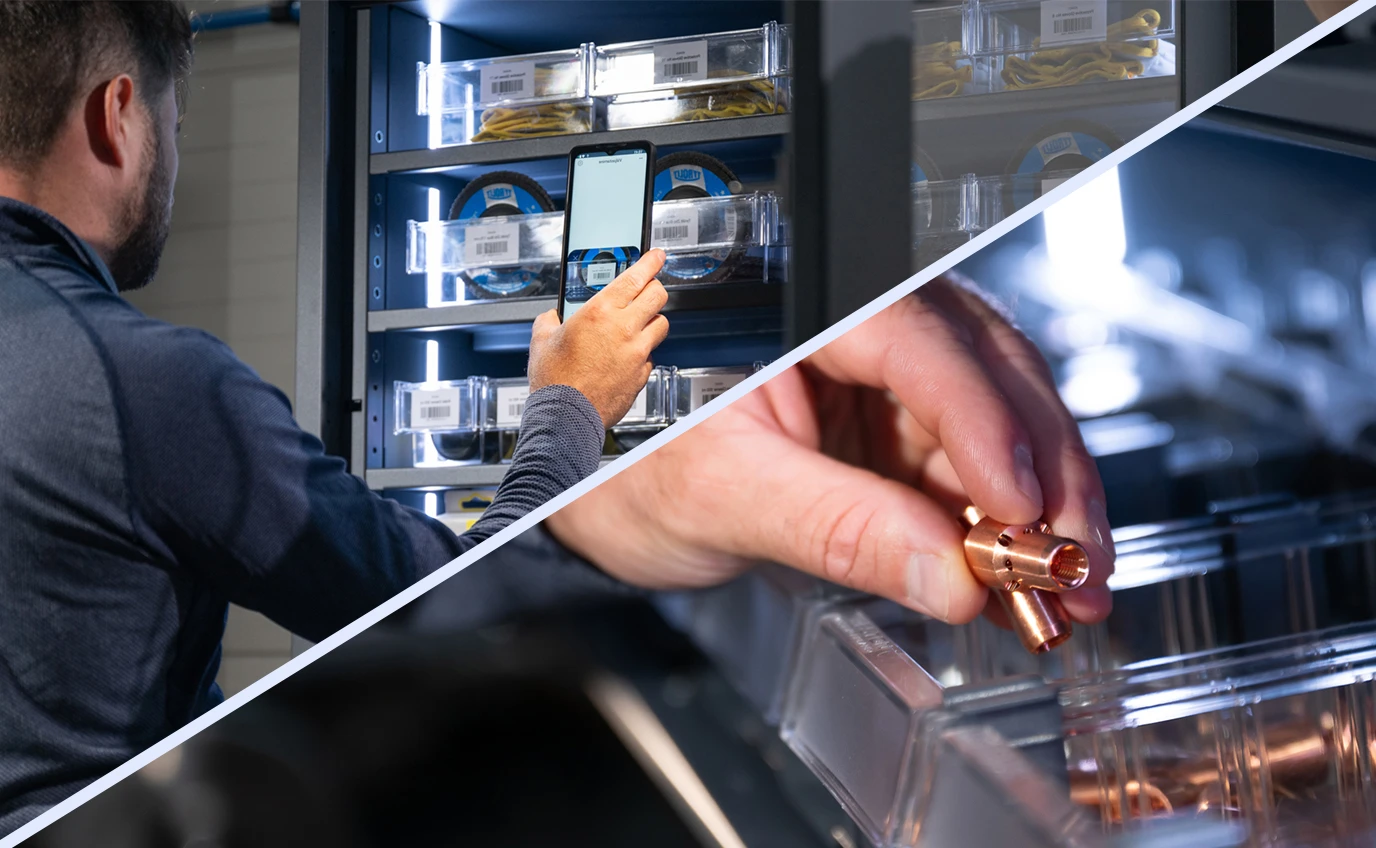
Items essential to production and maintenance tasks, including welding contact tips, safety gear, lubricants, and fasteners, should always be prioritized in a VMI inventory program to avoid disruptions.
Long lead time items
Some spare parts require significant sourcing time and should be pre-stocked within the VMI system to have timely availability and prevent production delays. While these items may move slower, including them in a VMI strategy enhances overall service reliability and customer satisfaction.
Sporadic or Infrequent Demand Items
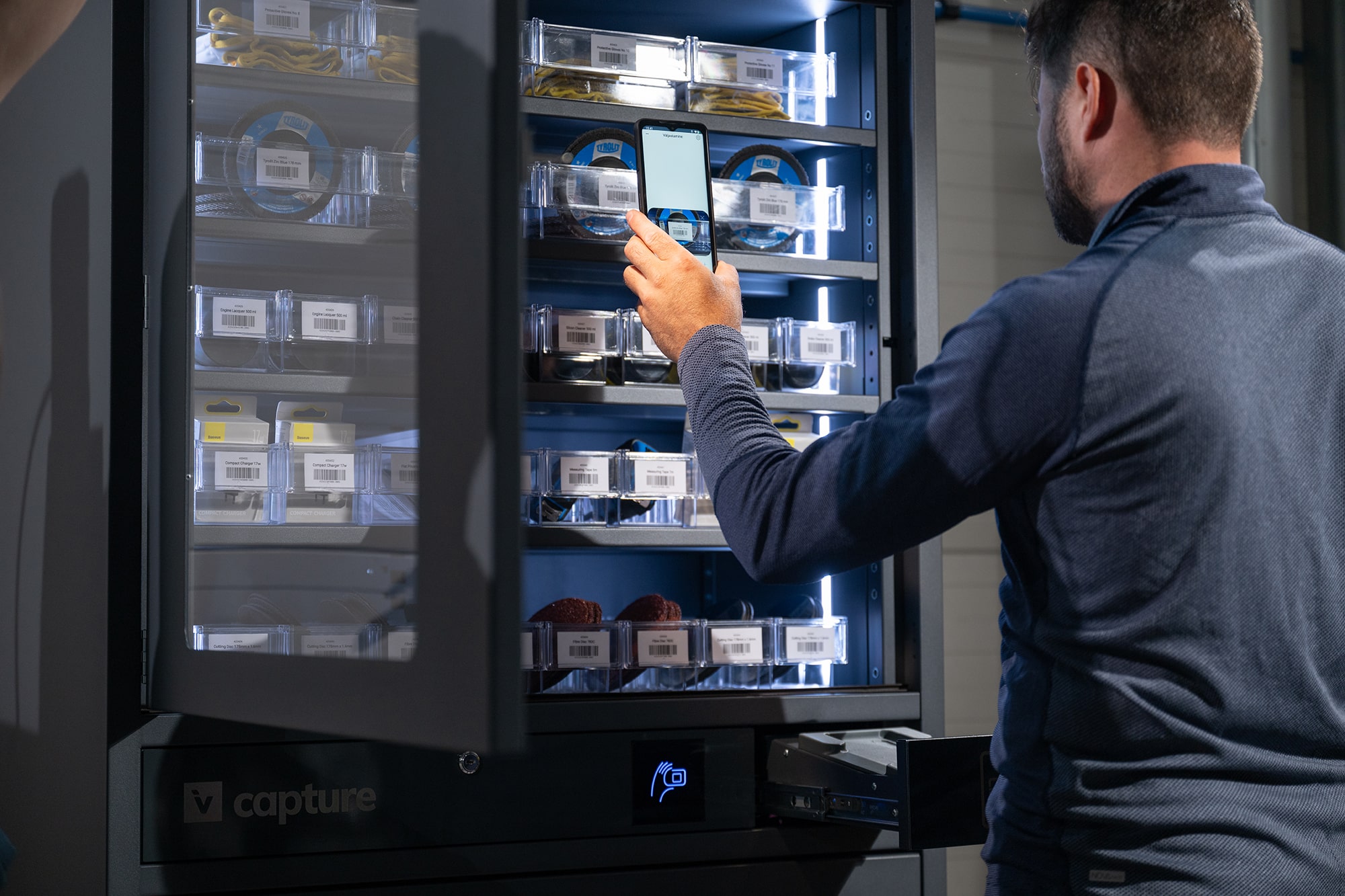
Not all inventory is suitable for automated VMI replenishment. Items with irregular usage patterns are better managed through alternative inventory control methods like manual restocking cycles or just-in-time (JIT) ordering. One effective approach is using a mobile storeroom app, which allows users to scan products, enter required quantities, and automatically generate an order for the connected supplier—eliminating manual data entry and improving procurement efficiency.
By using VMI solutions and smart inventory management, businesses can reduce stock, improve cash flow, and ensure industrial consumables and spare parts are always available when needed.
Choosing the Right VMI Storage Solutions
Selecting and implementing the right vendor-managed inventory storage solution is key to maintaining optimal inventory levels, improving inventory management, and ensuring critical industrial consumables and spare parts are always available. Depending on the size, weight, frequency of use, and security requirements of the items different storage solutions can improve efficiency, reduce waste, and streamline replenishment.
Weight-Sensing Vending Machines
Best for bulk-use consumables with consistent weight per unit, taken in varying quantities. These systems track and replenish automatically based on real-time usage data.
- Fasteners: Screws, nuts, bolts
- Welding consumables: Rods, wire spools
- PPE: Disposable gloves, earplugs
- Abrasives: Sandpaper sheets, grinding discs
- Items requiring extra security and loss prevention, such as:
- Power tool accessories: Drill bits, saw blades, torque wrenches
- Specialized consumables: Calibration tools, sensitive electronic parts
Smart Scan Cabinets (Barcode/NFC Control)
Best for high-value, serialized or compliance-tracked items that require precise monitoring and restricted access. These cabinets add an extra layer of security to ensure inventory accuracy and prevent unauthorized use.
- Compliance-tracked items: Chemicals, paint, and materials with expiry dates
- Variable-weight items: Liquid containers with inconsistent fill levels
- Kits and assorted packages: Pre-assembled maintenance kits, mixed fastener packs
- Multi-size consumables: Fasteners, gaskets, tubing
- Special electronic components: Restricted access for select users
- Very lightweight items that may not register weight changes accurately
Open Shelves with Scanning
Best for general-use, low-cost consumables where precise tracking isn’t required. This method offers quick access and can be restocked through barcode scanning on purchase orders or periodic audits.
- Basic PPE: Earplugs, face masks
- Low-cost abrasives: Sandpaper rolls
- General fasteners: Loose bolts, screws, washers
- Packing materials: Tape, markers
Industrial vending machines enhance accountability across the entire production line by providing real-time tracking of valuable tools and consumables. These systems help monitor inventory usage at the employee level, enforcing controlled access and release limits to prevent overuse and reduce waste.
Both industrial vending machines and open-shelf scanning solutions optimize equipment circulation by ensuring items are efficiently tracked, restocked, and readily available when needed. These solutions not only improve inventory visibility but also support and promote smarter resource allocation and usage control.
Managing Non-VMI Items: Ensuring Availability Without Overstocking
For items that don’t fit well into automated VMI systems, consider the following strategies:
- Periodic stock audits: Regular manual checks to maintain minimum stock levels.
- Hybrid approach: Use VMI for high-use items and traditional ordering for low-use items.
- Just-in-time (JIT) ordering: For expensive or rarely used spare parts with short lead times, order them only when needed rather than keeping excess stock.
- Supplier collaboration: Work with suppliers to establish automatic restocking alerts for critical but low-turnover items.
Software for Inventory Management
A crucial element that ties everything together in successful vendor managed inventory is software. With the right combination of modern hardware and smart software, businesses can achieve optimal total cost of ownership while ensuring smooth inventory operations.
When selecting a VMI partner, it’s essential to evaluate the software solutions they offer and how well they integrate with existing systems. For example, Invendor’s software is built on a modern Public API platform, allowing for seamless integration that saves time and reduces manual errors. Invendor APIs include Common API and Reporting API, both based on OAS3 specifications, provide secure, scalable, and standardized connectivity.
Cloud-Based Web Portals for Enhanced Accessibility
Equally important is the functionality of a web portal, which provides access to inventory data real-time anytime, and anywhere. A cloud-based web portal for inventory data enhances usability and offers a range of inventory management features, including:
- User and role management – Assign and manage user roles with controlled access.
- Customizable reporting – Generate tailored inventory reports to fit your needs.
- Data import & entry – Easily import, edit, and update inventory records without hassle.
- Smart cabinet & inventory level monitoring – Track stock levels, view real-time cabinet data, and prevent stockouts.
- Automated notifications – Receive alerts for critical inventory events, such as low stock warnings. The system automatically reports what items and quantities need to be replenished.
- Multi-user access & permissions – Share access with team members and customers, ensuring a collaborative inventory approach.
A well-designed, intuitive software solution allows businesses to manage inventory more efficiently, reduce operational disruptions, and boost productivity – ultimately driving better decision-making and cost savings.
VMI meaning in supply chain
Vendor manager inventory also referred to as supplier-managed inventory from a customer perspective, enables a supplier to monitor its product and component inventory levels from a warehouse at its onsite premises. It reduces shortages as well as surpluses. Supply chain management can thus shift inventory management responsibility and thus increase productivity and reduce costs. VMI models improve order accuracy by automating dataflow and advanced analytics enabling the reduction in rework.
Conclusion
VMI is a collaborative strategy, which is can produce impressive results, especially when undertaken with committed, approved partners with a proven track record. Integrated storage systems use syncronization for data storage to ensure inventory is constantly adapted to current market demand.
Selecting the right consumables and spare parts for a VMI program can significantly enhance operational efficiency, reduce waste, and optimize costs. By categorizing products based on consumption patterns, value, security needs, and replenishment logistics, companies can determine the best storage method – whether through weight-sensing vending machines, smart scan cabinets, or open-shelf scanning. For items that don’t fit neatly into these systems, alternative strategies such as JIT ordering and periodic audits ensure continued availability without excessive stock buildup.
Are you looking to improve or start your VMI program? Contact us via contact form or write to us info@invendor.com.